How Much Are Chicken Coops?
How much chicken coops cost depends on size and materials: a small wooden coop for 2 to 4 hens sits in the budget tier, a mid-size coop for 4 to 6 costs more, and an extra-large wooden coop for 8 to 10 hens lands in the premium tier. The building material, nest box count, run length and roof type move the figure more than anything else.
On this page (8 sections)
- How much are chicken coops at each flock size?
- What features raise the price of a chicken coop?
- Does the building material change how much chicken coops cost?
- How much do coops for 8 to 10 hens cost?
- What else should you budget for beyond the coop?
- Where does an automatic coop door fit in the budget?
- How can you keep chicken coop costs down?
- What's a sensible way to plan a chicken coop budget?
How much chicken coops cost depends on size and materials: a small wooden coop for 2 to 4 hens sits in the budget tier, a mid-size coop for 4 to 6 costs more, and an extra-large wooden coop for 8 to 10 hens lands in the premium tier. The building material, nest box count, run length and roof type move the figure more than anything else.
The coop is rarely the only cost. Feed, bedding, a feeder and waterer, a secure run and often an automatic door all join the budget.
Work those extras in early so the whole setup fits what you can spend.
How much are chicken coops at each flock size?
Price tracks flock size, because bigger coops use more wood, wire and nest boxes. A coop sized for 2 to 4 hens is the cheapest category, a 4 to 6 bird coop sits in the middle, and an 8 to 10 bird coop is the top tier.
Space needs drive the jump. A bigger flock needs more floor area, more roost length and more nest boxes, and every one of those adds material.
The Magazoopet coop for 4 to 6 chickens shows the middle tier well. It runs 61 in long by 33.5 in wide by 40.2 in high and includes 6 nesting boxes.
At the small end you'll find compact coops with 2 to 3 nest boxes; at the top end, coops over 100 in long with 6 boxes and an attached run.
Pick the size for your full flock, not just the chicks you buy first. Upgrading later usually costs more than buying the right size once.
Our guide to the best chicken coop for 4 chickens covers the small end in detail.
What features raise the price of a chicken coop?
The features that add cost are the ones that save work later: nest box count, pull-out trays, access doors, roof type and the run. A coop with six nesting boxes and five doors costs more than a plain box with one lid.
Nest boxes are a good example. The MEDEHOO extra large coop has 6 nesting boxes with outside access and a predator-proof lock.
Each box is extra framing and hinged panels, so the count shows up in the figure.
Cleaning design matters too. Extra-large sliding trays and five access doors make weekly cleanup quick.
A waterproof asphalt roof and PVC-coated nesting boxes add weather protection, and those materials cost more than a simple wooden lid.
Ventilation, roost bars and screened windows are smaller costs but still real. Add up the features you'll actually use.
A tray you pull out weekly is worth more than a decorative detail you'll never touch.
Does the building material change how much chicken coops cost?
Yes. Wood, plastic and metal coops land in different tiers at the same flock size, and each one trades purchase cost against upkeep.
Wood is the most common choice and spans budget to premium depending on size and joinery.
A wooden coop needs paint or stain every few years and can rot where water sits. Plastic coops often cost more up front, but they skip painting and resist rot.
Our roundup of the best plastic chicken coop options covers that trade-off.
Metal frames with wire runs cost less than fully enclosed wooden houses. They suit warm climates better than cold ones, since metal offers less insulation.
Match the material to your weather. A wet, windy site rewards a waterproof roof and sealed panels.
A mild, dry site lets you spend less on weatherproofing and more on space.
How much do coops for 8 to 10 hens cost?
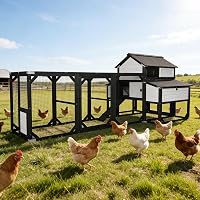
Coops for 8 to 10 hens are the premium tier, because they combine more floor space with a longer run and more nest boxes. The MEDEHOO extra large coop is a useful benchmark for what that tier includes.
It measures 118 in long by 56.7 in wide by 50 in high. That footprint gives 8 to 10 hens room to roam, nest and rest.
Six nesting boxes sit behind a predator-proof lock, and L-shaped metal brackets reinforce every corner.
The waterproof asphalt roof and PVC-coated nesting boxes keep the interior dry through wet seasons. Five access doors and extra-large sliding trays make cleaning fast.
Pre-drilled, labeled panels simplify assembly.
That combination is why the premium tier costs more. You're paying for the run mesh, the reinforced frame and the cleaning design as much as the extra length.
Compare more options in our guide to the best chicken coop for 10 chickens.
What else should you budget for beyond the coop?
Plan for feed, bedding, a feeder, a waterer and a secure run on top of the coop price. These are recurring or one-time costs that surprise first-time keepers who only priced the house.
Feed is the biggest ongoing cost, and it scales with flock size. Bedding for nest boxes and the floor needs topping up regularly.
A feeder and waterer are one-time buys, though larger flocks need bigger ones.
The run is a separate item on many coops. Some coops include one, while others connect to a run sold on its own.
The Magazoopet coop has an expandable design that connects to a chicken run sold separately.
Predator protection belongs in this list. Hardware cloth, locks and a secure latch all cost something.
A door that closes itself at dusk adds convenience and a layer of safety. Factor these in before you settle on a coop size.
Where does an automatic coop door fit in the budget?
An automatic door is an add-on cost, not part of the coop, and it earns its place by saving two trips a day and closing the coop when you can't. It also protects the flock from predators at dusk.
The Run-Chicken T50 runs on a rechargeable battery, so no solar panels or cables are needed. It opens and closes at sunrise and sunset, or on a timer you set in the app.
Aluminum construction handles rain, snow and heat.
An anti-pinch sensor stops the door closing on an obstruction. Six screws mount it, with no wiring, and Run-Chicken says it's tested from -15°F to 140°F.
The battery lasts up to 1 year in cold weather and 2 years in warm climates.
Treat this as a separate line in your budget. If you travel or work late, it's money well spent.
Read the full Aivituvin chicken coop review if you're weighing a complete coop setup instead.
How can you keep chicken coop costs down?
Choose the right size once, skip features you won't use, and buy the door as a separate add-on when you need it. Those three choices keep the total reasonable without cutting safety.
Start with flock size. A coop sized for your full flock avoids a second purchase later.
If you're unsure, pick the smaller size only when you truly plan to stop at a few hens.
Then trim features. A plain roof over a fancy one, or two access doors over five, lowers the figure.
Keep the parts that affect daily work and predator safety.
Compare materials against your climate. Wood costs less up front in many cases; plastic costs more but skips upkeep.
The right answer depends on your weather and how long you plan to keep chickens.
Finally, add an automatic door only if your schedule needs it. Our guide to chicken coop setup and care pulls the whole budget together, including run and extras.
What's a sensible way to plan a chicken coop budget?
Set a total budget first, then split it between the coop, the run, the door and the first month of feed and bedding. That order stops the coop from using up money you need for the rest of the setup.
Write down your flock size and your climate. Those two facts narrow the coop type, size and material quickly.
Then price the features you'll use and leave the rest out.
Keep a small reserve for the unexpected: a latch that needs replacing, extra bedding, or a run extension. It's easier to plan for than to absorb later.
Once the coop is in place, the ongoing costs settle into feed and bedding. Get the size and features right at the start, and how much chicken coops cost becomes a one-time decision rather than a series of upgrades.
Frequently asked questions
How much are chicken coops for a small backyard flock?
Small coops for 2 to 4 hens are the least costly option and usually fall in the budget tier. Wood, plastic and metal versions all exist at this size.
Expect the figure to climb once you add a run, a covered roof or an automatic door.
Is a wooden chicken coop more expensive than a plastic one?
Not always. Wood coops span budget to premium tiers depending on size and joinery.
Plastic coops often cost more up front at the same flock size, but they skip painting and rot repair over the years.
Do I need to budget for more than the coop itself?
Yes. Feed, bedding, a feeder and waterer, a secure run and possibly an automatic door all add to the total.
Plan for those extras before you choose a coop size, so the whole setup stays within reach.
Does a bigger chicken coop always cost more?
Usually, because more wood, wire and nest boxes go into it. Two coops with the same footprint can differ a lot, though.
Roof type, access doors, pull-out trays and assembly design change the figure as much as length does.
How much should I expect to spend on an automatic coop door?
Treat it as a separate add-on to the coop price. A battery-powered opener like the Run-Chicken T50 adds a modest cost and saves daily morning and evening trips.
It also protects the flock when you're away.
Can I save money by building a coop myself?
Often yes on materials, though tools, hardware and your time add up. A kit or ready-made coop trades that effort for a higher purchase cost.
Compare the two against your budget and how soon you need the coop in place.