
Setup, Pests & Weather
How Does a Chicken Coop Work?
How does a chicken coop work? Learn what the roost, nest boxes, run, door, ventilation and litter do, and how each part keeps hens safe and dry.
Clear picks and honest comparisons for wooden, plastic and walk-in chicken coops, runs and automatic door openers. Start with how many hens you keep, the coop style you like or the door you want to add.
How does a chicken coop work? Learn what the roost, nest boxes, run, door, ventilation and litter do, and how each part keeps hens safe and dry.

How tall should a chicken run be? A 6 to 6.5 ft walk-in height keeps daily care easy, while 3 to 4 ft suits small flocks and portable runs.
How often should I clean a chicken coop? Spot-clean daily and deep-clean every 4 to 6 weeks to keep hens healthy and cut ammonia and mites.

How long should a chicken run be? Size it at least 10 sq ft per bird and go longer, since length gives flock room to walk and scratch.
Do chicken runs need to be covered? A covered run keeps feed and bedding dry, adds shade and blocks hawks from above. Here's when a roof is worth it.
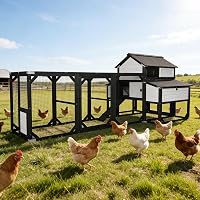
Can a chicken coop be too big? Yes, when extra space outruns warmth, predator control or your routine. Here's how to size a coop your flock uses well.
What is a chicken run? It's the fenced outdoor space attached to or separate from a coop, where chickens roam safely. Here's how to size and set one up.

Learn how to secure a chicken coop against raccoons, foxes, and other predators with strong latches, buried mesh, and an automatic door.
How much are chicken coops? See what drives the price at each flock size, which features you pay for, and where a door opener and extras fit in.