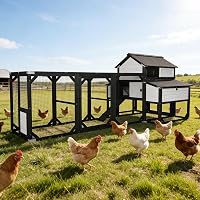
How Much Roost Space Does Each Chicken Need?
Allow 8 to 10 inches of roost space per standard-size chicken as a practical starting point, then adjust for bird size, weather, and how your flock settles at night. Measure usable perch length, not the bar's total length.
On this page (8 sections)
- How much roost space per chicken should you plan?
- Does chicken size change how much perch space you need?
- What makes a roost comfortable and usable?
- How many roost bars should a coop have?
- Which coop features help with roost planning?
- Where should roosts sit in relation to nesting boxes?
- How can you tell if your flock needs more roost space?
- How much roost space per chicken should you choose?
Allow 8 to 10 inches of roost space per standard-size chicken as a practical starting point. Give large birds more room, measure the usable perch length, and watch whether every chicken can settle without being pushed aside.
For a flock of 6 standard-size hens, that works out to about 48 to 60 inches of usable roost. Your flock's size, perch shape, and coop layout can change what works.
How much roost space per chicken should you plan?
Plan on 8 to 10 inches of perch length per standard-size chicken. This is a starting estimate, not a guarantee that every flock will use a roost the same way.
A longer, clear perch gives birds room to settle beside each other. Measure the area they can actually stand on, leaving out end sections blocked by walls, brackets, or other obstacles.
Large breeds may need more space, while bantams may need less. If you're choosing a coop for a particular flock, our coop sizes by flock size guide can help you compare the full layout.
How do you calculate roost length for your flock?
Multiply your chicken count by 8 to 10 inches, then add room for any sections birds can't reach or use. For example, 6 standard-size chickens need about 48 to 60 inches of usable perch.
Use the upper end when your birds are large or tend to crowd one another. Observe them at bedtime: a bird repeatedly displaced from the perch is a sign to rethink the length or layout.
Does chicken size change how much perch space you need?
Yes, larger chickens usually need more room than smaller birds. The 8 to 10 inch starting point is for standard-size chickens, so allow extra space if your flock includes large breeds.
Bantams may fit closer together, but don't reduce space based on size alone. If smaller birds get pushed aside, spread the flock across more than one perch or provide more usable length.
Mixed flocks can be harder to size with a single estimate. Watch how the birds arrange themselves and check that all can perch comfortably.
What makes a roost comfortable and usable?
A good roost gives each bird a stable, unobstructed place to grip and settle. Keep the perch clear of walls, sharp edges, and areas where birds would stand over food or water.
The perch should suit your birds' feet and the space available in the coop. Check that it stays firm when birds climb on and that there's room to get on and off without a collision.
Layout matters along with length. Our guide to how high a chicken coop should be off the ground covers coop height and access considerations.
How many roost bars should a coop have?
Use enough bars to give the flock its full needed length without crowding. One long bar may work in a compact coop, while a larger flock may need several bars arranged with clear access.
Multiple bars can help spread birds out, but avoid placing one directly above another if the upper birds would soil those below. Keep perches separate from nesting areas so birds don't settle in the boxes.
A coop can advertise a flock capacity without providing enough usable roost length for your birds. Compare the perch layout and internal space before choosing; our guide to what size chicken coop 8 chickens need explains how flock size affects coop selection.
Which coop features help with roost planning?
Look for a stated perch layout and enough interior room to use it. The following options include roost features or larger layouts that may help with planning, but check the fit for your flock before choosing.
Is the Petsfit coop suited to a smaller flock?
The Petsfit Coop with Run for 4-6 Hens lists two indoor roosting bars at different heights and a separate outdoor run perch. Its overall dimensions include the run, so confirm the inner coop space works for your birds.
Does the TRYKERPET coop give a larger flock room to perch?
The TRYKERPET Wood Coop for 10-12 Hens measures 96.1 x 71 x 71 inches overall and has a large living area. Its product details don't specify roost-bar length, so check the perch arrangement and usable space before deciding.
What about the MEDEHOO extra-large coop?
The MEDEHOO Extra Large Coop for 8-10 Hens measures 118.11 x 56.7 x 49.53 inches and includes an extended run. Those overall dimensions do not tell you the roost length, so verify the interior perch layout for your flock.
Where should roosts sit in relation to nesting boxes?
Place roosts so chickens can settle without sleeping in the nesting boxes. If perches sit lower than the boxes, birds may be less likely to choose the boxes for overnight rest.
Keep the approach to each perch clear, and make sure the arrangement doesn't block access to nest boxes during the day. For the separate question of egg-laying space, see how many nesting boxes per chicken you need.
How can you tell if your flock needs more roost space?
Watch the flock when it settles for the night. Crowding, repeated shoving, or birds left off the perch can signal that you need more usable space or a better arrangement.
Check again after adding birds or changing the coop. Roost use can shift with age, flock dynamics, and seasonal behavior, so leave yourself a way to adjust the layout.
How much roost space per chicken should you choose?
For standard-size birds, begin with 8 to 10 inches per chicken, then use the upper end or add perch length for larger birds and crowded flocks. Choose a coop only after checking its usable interior roost space, not just its stated flock capacity.
If you're comparing coop sizes for your flock, start with the coops by flock size guide and check that the perch layout suits the birds you keep.
Frequently asked questions
How much roost space does each chicken need?
Allow about 8 to 10 inches of usable perch length per standard-size chicken as a starting point. Large breeds may need more, while bantams may need less.
Watch whether every bird can settle without being pushed off, and add perch space or another bar if the flock crowds.
How long should a roost be for 6 chickens?
A 6-chicken flock needs about 48 to 60 inches of usable roost space for standard-size birds. Leave room at the ends and account for supports or sections the birds cannot use.
If several birds are large, plan more space and observe how they perch together.
Should chickens share one roosting bar?
They can share a bar if it has enough usable length and the birds can settle without crowding. A second bar can help when flock members compete for the same spot, but place it so birds are not forced to perch above feeders, water, or nest boxes.
How high should a chicken roost be?
Set the roost at a height your birds can reach safely, with enough headroom and clear space below for droppings and movement. Breed, age, and coop layout matter.
Use a ramp or lower perch for birds that struggle to jump, and keep the roost away from nesting boxes.