Are Chicken Coops Heated or Air Conditioned?
Most chicken coops are not heated or air conditioned. Standard coops keep hens comfortable with ventilation, shade and dry bedding instead, and only a few small setups add a heater for extreme cold. Hens handle cold better than damp air or sudden heat.
On this page (9 sections)
- Are chicken coops heated or air conditioned in normal use?
- What does a heated chicken coop actually do?
- How do coops stay cool in summer without AC?
- Does insulation replace heating and air conditioning?
- Which coop features matter more than heating or AC?
- How do you keep a coop warm in winter without a heater?
- How do you keep a coop cool in summer without AC?
- What about predators when vents and windows are open?
- So, should you heat or cool your coop?
Most chicken coops are not heated or air conditioned. A standard coop keeps hens comfortable with ventilation, shade and dry bedding, and only a few small setups add a heater for extreme cold.
Hens handle cold better than damp air or sudden heat.
So when people ask are chicken coops heated or air conditioned, the short answer is that climate control is the exception, not the rule. The coop's job is to block wind and rain while letting moist air out.
That's why windows, vents and insulation matter more than a thermostat.
Are chicken coops heated or air conditioned in normal use?
Most coops run without a heater or an air conditioner. They are unheated shelters that rely on the flock's own body heat and on airflow to stay livable.
Chickens carry a layer of feathers and gather on the roost at night, so a closed, dry coop holds warmth reasonably well. The bigger risk in winter is moisture.
Damp bedding and poor airflow cause frostbite on combs and feet far more often than cold air alone.
In summer, an air conditioner is rarely practical in a backyard coop. Power runs, dust and the open design of most coops work against it.
Shade, cross-ventilation and cool water do the real work.
Some keepers in very cold areas add a small heater or heat lamp. That is a choice for extreme conditions, not a default feature of chicken coops.
What does a heated chicken coop actually do?
A heated coop raises the inside temperature a few degrees, mainly to keep water from freezing and to take the edge off hard cold snaps. It is not a warm room.
Most heated setups use a small panel heater, a lamp or a heated water base rather than heating the whole structure. The goal is to avoid frostbite risk and keep hens drinking, not to make the coop cozy for people.
Heat comes with trade-offs. A heat lamp is a fire risk if it falls or touches bedding, and a coop sealed to hold heat traps ammonia and moisture.
Many keepers skip heating and fix drafts and damp instead.
If you do add heat, keep it low, guard the bulb or element, and leave ventilation open. A coop that is warm but stuffy is worse for hens than a cool, dry one.
How do coops stay cool in summer without AC?
Shade and airflow do the cooling. An air conditioner in a coop is uncommon, so the design has to move air and block direct sun.
Key steps for hot weather:
- Open windows and high vents on opposite sides so air passes through.
- Put the coop in shade or add a shade cloth over the run.
- Give hens deep shade and cool, clean water in the run.
- Keep bedding dry so the coop doesn't hold humid air.
Hens pant and hold their wings out when they're too hot. If you see that, add shade and airflow right away.
A fan with a safe guard can help in still air, but it should pull air through the coop, not blow hot air onto the roost.
Does insulation replace heating and air conditioning?
Insulation reduces temperature swings but does not replace a heater or AC. It slows heat loss in winter and heat gain in summer, which takes pressure off the flock.
Walls with foam or thick wood help a coop hold a steadier temperature. That matters most on very hot afternoons and freezing nights.
It also cuts condensation when the outside air is much colder than the inside.
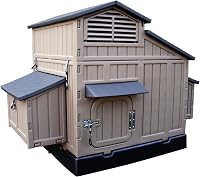
The FunXplore coop uses foam insulation between fir wood and plywood, with an asphalt roof and oversized front and rear windows. Its maker says the walls help hens stay warm in winter and cool in summer.
The same windows that clear ammonia in summer can be closed to hold warmth when it's cold.
Insulation is not a climate control system. A coop still needs vents, and hens still need shade in summer.
Pair insulation with airflow and you get most of what a heater would do, without the fire risk.
Which coop features matter more than heating or AC?
Ventilation, a dry floor and shade matter more than a heater or an air conditioner. These are the features to check before you buy.
Look for high vents and windows you can open and close. High openings let warm, moist air out while keeping drafts off the roost.
A raised floor keeps the coop off damp ground and away from ground moisture.
The nicedday coop is raised and has dual vents for airflow, an asphalt roof and 1.38-inch thick wood. Its maker says the insulation holds warmth in winter and supports steady egg laying in low temperatures.
The raised design also keeps the coop off the ground for easier cleaning.
For a plastic coop, the molded panels act as insulation. The Omlet Go Up is a raised plastic coop for up to 4 hens with weatherproof panels.
Its maker says the coop keeps hens cool in summer and warm in winter, and the smooth plastic has no wood grain for mites to hide in.
If you are choosing between these kinds of coops, see our guide to the best chicken coop for 4 chickens for size and layout comparisons. Also check how much chicken coops cost so the climate features fit your budget.
How do you keep a coop warm in winter without a heater?
Block drafts, dry the bedding and let the flock's body heat do the rest. Most healthy adult hens do fine in a cold, dry coop.
Close windows on the windward side but leave high vents open. Add deep, dry bedding such as straw or shavings so hens can nest down.
Fix any gaps at the floor or roost level that let cold wind hit the birds.
Watch for frostbite signs on combs and toes. If the coop is damp and cold, the fix is airflow and dry bedding, not more heat.
A small guarded heater is an option in extreme cold, but it is not required.
How do you keep a coop cool in summer without AC?
Shade, cross-ventilation and plenty of water carry the load. An air conditioner is rarely worth the cost and wiring in a backyard coop.
Open the windows wide and let air pass through. Add shade over the run and keep water in the shade so it stays cooler.
Avoid overcrowding, since more birds mean more body heat and more moisture.
Check hens in the hottest part of the day. Panting and wing-holding mean they need more shade or airflow.
If the coop sits in full sun, move it or add shade cloth before summer peaks.
What about predators when vents and windows are open?
Open windows and vents raise predator risk, so mesh and latches matter as much as airflow. A well-vented coop is only safe if the openings are screened.
Use sturdy metal mesh on every opening you leave open. Check that windows latch closed and that the coop sits above the ground where digging animals reach.
Raised coops with solid frames help here.
For the ground-level threat, read our guide to how to keep rats out of chicken coops. Rats squeeze through small gaps, so mesh size and a clean floor matter.
Snakes also find their way into coops through gaps and open vents. Our guide to how to snake-proof a chicken coop covers the mesh and seal details that keep both snakes and the pests they hunt out.
So, should you heat or cool your coop?
No, in most cases you should not heat or air condition a chicken coop. Ventilation, shade, dry bedding and insulation do the job for typical backyard flocks.
If you live where winters are severe, a small guarded heater can help keep water liquid and reduce frostbite risk. In hot regions, shade and airflow beat an air conditioner.
Pick a coop with openable windows and a raised floor, and the flock handles most weather on its own.
Are chicken coops heated or air conditioned? Mostly neither, and that is by design.
Choose a well-vented, insulated coop and adjust the openings as the seasons change.
Frequently asked questions
Do chickens need a heat lamp in winter?
Usually not. Healthy adult hens in a dry, draft-free coop with good bedding handle normal winter cold, so a heat lamp is mainly for very young chicks or extreme dips.
A lamp adds fire and overheating risk, so most keepers rely on insulation and ventilation first.
Can you put a fan in a chicken coop?
Yes, a fan can move air on hot days, but it needs safe wiring and a guard so hens cannot reach the blades. Place it to pull air through the coop rather than blowing straight onto roosts.
A shaded run and open windows often do more than a fan alone.
Does a heated chicken coop keep eggs from freezing?
It can help in hard freezes, but a heated coop is not required for eggs. Collect eggs often in cold snaps and keep nesting areas dry.
Insulation and a draft-free roost do more for the flock than heating the whole coop.
How much ventilation does a chicken coop need?
A common guideline is about 1 square foot of vent opening per 10 square feet of floor space, placed high so moist air escapes. Enough airflow clears ammonia and damp bedding while keeping the roost area free of direct drafts.