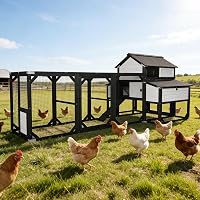
How Does a Chicken Coop Work?
A chicken coop works as a dry, ventilated shelter with a raised roost for sleeping, nest boxes for laying, and a secure door that closes at night. The run gives daytime space, and litter on the floor absorbs droppings so the house stays usable.
On this page (11 sections)
- What does a chicken coop actually do for the flock?
- How do the roost, nest boxes and floor divide the space?
- How does ventilation work without letting in rain or predators?
- How does the run connect to the coop, and what does the door do?
- What does the inside of a coop need for daily care?
- How do you keep the coop safe from predators and weather?
- How many chickens fit, and which coop size should you choose?
- How do you set up a new coop in the first week?
- What does a chicken coop need week to week?
- How does a chicken coop work in cold and hot weather?
- How does a chicken coop work, and what should you set up first?
A chicken coop works as a dry, ventilated shelter with a raised roost for sleeping, nest boxes for laying, and a secure door that closes at night. The run gives daytime space, and litter on the floor absorbs droppings so the house stays usable.
What does a chicken coop actually do for the flock?
The coop is the hens' bedroom and laying room, not their whole world. It keeps them off the ground and out of weather, gives them a safe roost at night, and holds the nest boxes where eggs are laid.
Chickens are prey animals. At dusk they look for a high place to settle, which is why a raised bar matters more than floor space alone.
A closed door and solid walls keep foxes and raccoons out while the birds sleep.
The house also keeps eggs clean. Nest boxes sit away from the roost so droppings fall on the floor or tray, not into the straw where eggs land.
That one layout choice saves a lot of scrubbing.
Finally, the coop gives you a place to manage manure. Litter soaks up moisture and droppings, and a removable tray or deep bedding makes the weekly tidy-up short.
How do the roost, nest boxes and floor divide the space?
A coop splits into three zones: roost up high for sleeping, nest boxes at mid height for laying, and floor space for moving around. Each zone has its own height and its own cleaning routine.
The roost is a bar or flat board the hens grip at night. It should sit higher than the nest boxes and away from the door draft.
Three 36 in roosts fit the Hatching Time Formex, which is enough for a small flock to settle without crowding.
Nest boxes are enclosed cubbies lined with straw or shavings. The Formex model has 4 nesting spots with removable dividers, so you can open the boxes into one long space or keep them separate.
Floor space is where hens walk and scratch. A pull-out litter tray under this area makes scooping quick.
Keep feed and water off the floor so spills don't turn the litter into mud.
How does ventilation work without letting in rain or predators?
Ventilation moves warm, damp air out near the top and pulls fresh air in low down. Chickens breathe out a lot of moisture, and a sealed coop turns that into condensation on the walls and roost.
Good coops put adjustable vents high on the walls, above the roost so drafts don't hit the birds. Low vents or gaps under the eaves let fresh air in.
The Formex coop uses adjustable ventilation for this, and you open or close it with the season.
The trade-off is simple. Too much open mesh and the coop gets cold and wet; too little and the litter stays damp and smelly.
Aim for a dry house with moving air and no direct draft on the perch.
Check vents before you buy. Fixed slots are easy to forget, while adjustable ones let you close down in a storm and open up in humid weather.
How does the run connect to the coop, and what does the door do?
The run is the fenced daytime yard attached to the coop, and the pop door is the hatch between them. Hens walk out in the morning and back in at dusk, so the door is the busiest part of the setup.
A run needs a roof or netting against hawks and climbing predators, and mesh buried at the base against digging. Size it for daytime exercise, not overnight housing.
Many owners keep a larger run and a smaller house.
The pop door is where automation pays off. An automatic door opens at sunrise and closes at sunset, so you don't rush home.
The Run-Chicken T50 runs on a rechargeable battery with no cables and mounts with six screws.
The T50 has smart app and timer control, and the maker says the battery lasts up to a year in cold weather and two years in warm climates. Its safety sensor stops the door closing on a hen in the way.
For a wooden coop and a simple dusk-to-dawn cycle, the Omlet door is the other common pick.
Omlet says its Autodoor works with all wooden coops and can be fitted to open left or right. It runs on 4 AA batteries with about a 6-month life.
Both doors solve the same problem, so the choice comes down to your coop material and how you want to set the schedule. Our Aivituvin chicken coop review shows how a door fits on a house with a built-in run.
What does the inside of a coop need for daily care?
Litter, a feeder, a drinker and a way to remove droppings are the daily essentials. Everything else is comfort, and comfort matters most in winter and wet weather.
Use shavings, straw or hemp litter on the floor and in the nest boxes. Deep bedding works well in cold months because it composts slowly and gives off a little warmth.
Clean out the worst of it every few days and do a full change when it smells or feels damp.
Hang the feeder and drinker off the floor so hens don't kick litter into them. In freezing weather, check the drinker twice a day.
Feed stored in a metal bin keeps rats and mice out.
If your coop has a removable tray and quick-access boxes, the morning routine takes minutes rather than a full scrub.
How do you keep the coop safe from predators and weather?
Predators come through gaps and digs, and weather comes through the roof, so check both before the hens move in. Hardware cloth beats chicken wire for strength, and a solid roof beats a tarp.
Foxes dig, raccoons open simple latches, and hawks strike from above. Bury mesh at least a foot into the ground around the run and fit a roof or net over the top.
Use a two-step latch or a carabiner on the door.
For weather, raise the coop off wet ground and give the roof an overhang. The Formex house is made from impact-resistant plastic that the maker says resists UV, weather and chemicals, so it won't rot like wood.
That matters in rainy climates.
The Run-Chicken T50 is weatherproof aluminum and the maker says it works from -15°F to 140°F. The Omlet door has a waterproof casing to IPX6 and is tested down to -4°F.
Both handle hard winters better than a loose wooden hatch.
How many chickens fit, and which coop size should you choose?
Plan about 3 to 4 sq ft of coop floor per large hen, plus roost length and nest boxes. A coop sold for 4 to 6 hens suits a small backyard flock; a 10-hen house suits a bigger one.
The Hatching Time Formex is rated for 4-6 large chickens or 6-12 bantams. It snaps together without tools, weighs 65 lb and measures 43 x 17 x 26 inches, so one person can move it.
For smaller flocks, our guide to the best chicken coop for 4 chickens covers compact houses. If you're planning for a bigger flock or selling eggs, compare the best chicken coop for 10 chickens.
Before you commit to a build, our breakdown of how much chicken coops cost helps you weigh a plastic kit against a wooden one.
How do you set up a new coop in the first week?
Place the coop on level, dry ground, fit the door and mesh, then move the hens in at dusk. Starting at night means the flock wakes up in its new home and treats it as theirs.
Clear the spot so rain drains away from the coop. Put the run where it gets morning sun and some afternoon shade.
Check that the door closes fully and the latch holds before any bird goes in.
Fill the nest boxes with straw, set the roost at the right height and hang the feeder and drinker. Then carry the hens in after dark.
Watch the first few nights. Hens should find the roost on their own; if they pile in a corner, the bar may be too high or too close to the wall.
Set the automatic door's timer or light sensor and test it while you're home.
What does a chicken coop need week to week?
Once the setup is right, the work is short: scoop, refill, check the door and look for damage. A coop that works well saves time because each part does its job without fuss.
Scoop under the roost every few days and top up the litter. Refill feed and water, and scrub the drinker when it looks slimy.
Check the nest boxes for dirty straw and cracked eggs.
Walk the run once a week and look for new digs or loose mesh. Test the pop door by hand to confirm it opens and closes freely.
In winter, clear snow from the roof and keep the vents open on mild days. A small repair now beats a wet flock later.
How does a chicken coop work in cold and hot weather?
In cold, the coop holds the flock's body heat if it's dry and draft-free; in heat, shade and airflow do the cooling. Chickens handle cold better than they handle damp.
For winter, close the vents down to a slot and keep the roost away from drafts. Don't seal the coop tight; some air must move.
Deep litter adds a little warmth underfoot. The Run-Chicken T50's anti-pinch sensor still matters when a hen lingers in the door on a frosty morning.
For summer, open the vents wide, give shade over the run and keep water in the shade. A coop in full afternoon sun gets too hot even with vents open, so a tree or shade cloth helps.
Plastic coops like the Formex don't absorb water, so they dry fast after rain.
In both seasons, the door routine stays the same. Open in the morning, close at dusk.
The trick is not to forget, which is why many owners fit an automatic door.
How does a chicken coop work, and what should you set up first?
A coop works when each part does one job: roost for sleeping, nest boxes for laying, vents for air, door for safety and litter for cleanliness. Get those five right and the flock stays healthy with little daily effort.
Set up the house first: solid floor, raised roost, dry nest boxes and open vents. Then fit a door you can trust and mesh the run.
The Run-Chicken T50 is the easiest fit for most backyard coops because it needs no wiring and mounts in minutes. The Omlet Autodoor suits wooden coops and the Omlet plastic houses.
For the house itself, the Hatching Time Formex covers a 4 to 6 hen flock with a snap-together build that won't rot. Pick the size for the flock you'll keep, fit the door and mesh, and the rest is a short weekly routine.
Frequently asked questions
How often should coop litter be changed?
Plan on a full change every few weeks in a small coop, more often in wet weather. Scoop droppings under the roost every few days, and replace all litter when it smells sour or stays damp.
Should the coop door stay open at night?
No. Close the door at dusk so foxes and raccoons cannot walk in.
An automatic door that shuts on a light sensor does this without you being home, and a timer or app setting covers cloudy evenings.
Can chickens sleep in the nest boxes?
They can, but it's better if they don't. Hens that roost on a bar stay cleaner and keep eggs out of droppings.
Fit the roost higher than the nest boxes and the birds will usually choose it.
How much space does each chicken need inside the coop?
About 3 to 4 sq ft of floor per large hen is a common guide, plus roost length. Bantams need less.
Crowded birds get damp litter fast, so size the house for the flock you'll have, not just the chicks you start with.