What Is a Chicken Run?
A chicken run is the fenced outdoor area where chickens move around safely during the day. It keeps the flock in and predators out, and it usually connects to a coop that provides shelter at night.
On this page (8 sections)
- What is a chicken run used for?
- How is a chicken run different from a chicken coop?
- How big should a chicken run be?
- What materials and features should a run have?
- What are the main types of chicken runs?
- How do you set up a chicken run safely?
- How do you keep a chicken run clean and dry?
- Which run should you pick?
A chicken run is the fenced outdoor area where chickens move around safely during the day. It keeps the flock in and predators out, and it usually connects to a coop that provides shelter at night.
People often use "coop" and "run" as if they mean the same thing. They don't.
The coop is the house; the run is the yard. Knowing what a chicken run does, how big it should be and what belongs inside it helps you set up a healthier flock.
What is a chicken run used for?
A chicken run gives chickens safe outdoor space to walk, scratch and peck. It limits where they roam while still letting them behave like chickens.
Chickens are active birds. They dust bathe, hunt for bugs and stretch their wings.
A run lets them do that without free-ranging into flower beds or toward the road.
Runs do three jobs at once. They contain the flock, they add a layer of predator protection and they keep the yard tidy.
Some runs also include a covered section so birds can stay outside in light rain.
Runs come in fixed and portable styles. A fixed run sits in one spot and can be as simple as posts and wire mesh.
A portable run is light enough to move around the lawn, for fresh grass and fewer bare patches.
How is a chicken run different from a chicken coop?
The coop is the shelter and the run is the exercise area. The coop has walls, a roof, nest boxes and roosts.
The run is open or partly covered and sits on the ground.
At night, chickens need the coop's protection. It keeps them dry, warm and safe from raccoons, foxes and owls.
The run handles daytime activity and gives the flock room to spread out.
Many starter coops bundle a raised house with a small run underneath. That setup works for a couple of birds.
Larger flocks usually need a separate, bigger run. Our comparison of the best chicken runs covers the stand-alone options.
A run without a coop leaves chickens with no secure roost. A coop without a run keeps them cooped up.
The two parts work best as a pair.
How big should a chicken run be?
Plan at least 8 to 10 sq ft of run per chicken, and more for active breeds. The run's floor area, not the coop's, sets how many birds it can hold.
Multiply the run's length by its width to get square feet. A 9.8 x 6.5 ft run measures about 64 sq ft.
At 8 sq ft per bird, that's room for 8 hens; at 10 sq ft, about 6.
| Run size | Floor area | Birds at 8 sq ft | Birds at 10 sq ft |
|---|---|---|---|
| 9.8 x 6.5 ft | about 64 sq ft | 8 | 6 |
| 10.25 x 3.2 ft | about 32 sq ft | 4 | 3 |
| 15 x 10 ft | 150 sq ft | 18 | 15 |
Bigger is better than the minimum. Crowded runs turn to mud fast, and muddy birds get sick more often.
If your birds will stay in the run all day rather than free-range, aim for the higher end.
Vagger puts the 15 x 10 ft run's range at 20 to 30 chickens. That's a looser estimate than the 8 to 10 sq ft rule, and it depends on breed and setup.
Treat it as an upper limit, not a target.
What materials and features should a run have?
Look for sturdy wire mesh, a frame that doesn't wobble and a cover for weather. These three features decide whether a run lasts and whether the flock stays safe.
Wire mesh should be closely spaced. Small gaps keep chicks in and keep raccoons from reaching through.
Hexagonal mesh and welded wire both work when the spacing is tight.
The frame needs braces. The 9.8 x 6.5 ft run uses bottom corner braces and an extra rear support pole to cut wobble.
A peaked roof also helps, because it directs rain away instead of letting it pool.
A waterproof, UV-resistant cover gives shade and sheds light rain and snow. It also makes the run usable on hot days when the flock needs a cooler spot.
Height matters for you, not just the birds. A walk-in run around 6.5 ft tall lets you feed and clean without crawling.
Shorter runs are lighter and cheaper but harder to work in.
What are the main types of chicken runs?
Fixed, portable and covered runs are the three main kinds. Each suits a different yard and flock size.
Fixed runs stay in place. They suit larger flocks, permanent coops and yards where you want a stable structure.
They're heavier and take more assembly.
Portable runs move around the yard. They suit small flocks, rotational grazing and renters who can't build permanent structures.
They're lighter but usually shorter.
Covered runs sit between the two. The cover protects against weather and shade, and the structure stays put.
Our guide to what to put in a chicken run covers the inside setup for any type.
Which covered run suits most flocks?
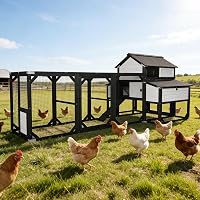
The 9.8 x 6.5 Ft Covered Metal Run fits most backyard flocks that want a walk-in space with weather cover. Its 9.8 x 6.5 x 6.5 ft frame gives about 64 sq ft and full-height access.
The bottom corner braces and extra rear support pole help steady the frame. A peaked roof holds the detachable waterproof cover and sheds rain and snow.
The eucalyptus perch measures 47 x 40 in and gives hens a raised place to rest.
CHIKENCOOP says assembly takes about 2 hours with labeled parts and clear instructions. This run suits a small to mid-size flock that stays in the run part of the day.
Pick a bigger footprint if you keep more than 8 birds.
Which run works for small yards and renters?
The NUGRIART Portable Run with Cover suits small yards and renters who need to move the setup. Its 123 x 38 x 34 in frame covers about 32 sq ft.
The light build lets you reposition it for fresh ground. A gravity lock helps keep the door shut, and five access doors (four side and one top) make feeding and cleaning easier.
The 1.6 in wire spacing keeps small birds in while airflow stays good.
NUGRIART says the PE cover is waterproof and the metal is rust-resistant. This run suits 3 to 4 chickens at the 8 sq ft rule.
It's a good first run or a daytime pen that pairs with a separate coop. The shorter height means you'll crouch to clean.
Which run fits a large flock?
The VAGGER 15 x 10 Ft Metal Run fits large flocks and farm setups. Its 15 x 10 x 6.5 ft frame covers 150 sq ft with full walk-in height.
The galvanized steel tubes and reinforced joints give it stability for backyard or farm use. Hexagonal wire mesh surrounds the frame to contain birds and discourage intruders.
A full-height door with a secure latch makes daily entry easy.
The waterproof, UV-resistant cover sits on a peaked roof that directs rain away. Multiple fastening points hold the cover in place.
At the 8 to 10 sq ft rule, this run holds 15 to 18 birds. Vagger's own figure of 20 to 30 birds is a looser upper limit.
It also works as a run for ducks or rabbits.
How do you set up a chicken run safely?
Site the run on dry, level ground with shade, then secure the base and the door. Safe setup comes down to a few checks you make before the birds move in.
Pick a spot with good drainage. Low ground turns into mud after rain.
Place the run so part of it gets shade during the hottest hours.
Check the wire and frame for gaps or sharp edges. Make sure the door latches firmly.
A gravity lock like the one on the NUGRIART run helps the door close behind you.
Think about digging predators. An apron of wire laid flat on the ground around the base helps block animals that dig.
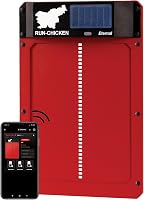
Close the coop door at night and consider an automatic door. Our Run-Chicken Eternal Solar Door review covers one hands-off option.
Keep feed and water inside the run but off the ground, so it stays clean and dry.
How do you keep a chicken run clean and dry?
Clean the run often, keep the ground dry and rotate the spot when you can. A dry run means healthier birds and less smell.
Remove droppings and spilled feed regularly. Wet feed spoils and draws pests.
Rake or turn the ground now and then to keep it from packing down.
Use a cover or shade cloth to keep part of the run dry. The covered runs here all include a waterproof top, which helps on rainy days.
Move portable runs to fresh ground when the grass wears thin. Fixed runs benefit from added bedding or a shallow layer of sand or gravel in wet spots.
Check the frame and wire every few weeks for damage. Repair small holes before a predator finds them.
A run is only as safe as its weakest point.
Which run should you pick?
Pick the 9.8 x 6.5 Ft Covered Metal Run for most backyard flocks. It gives walk-in height, weather cover and a sturdy frame in one package.
Pick the NUGRIART portable run for a small yard or a starter flock you need to move. Pick the VAGGER 15 x 10 Ft run when you keep 15 or more birds.
So what is a chicken run in practice? It's the safe outdoor half of a chicken setup.
Size it to your flock, cover it for weather and secure the base and door. Pair it with a coop that closes at night, and your flock gets both room to roam and shelter after dark.
If you're still choosing the house, our best chicken coops for 4 chickens helps match coop to run.
Frequently asked questions
What is the difference between a chicken coop and a chicken run?
A coop is the enclosed shelter where chickens sleep, lay eggs and hide from weather. A run is the fenced outdoor area where they walk, scratch and peck during the day.
Many coops include a built-in run, and many runs stand on their own.
Does a chicken run need a roof?
A roof or cover is not mandatory, but it helps. A waterproof cover sheds rain and snow and gives shade in summer.
A peaked roof also directs rain away from the frame instead of letting it pool on top.
Can chickens stay in the run all day?
Yes, chickens can spend daylight hours in a well-fenced run with shade and water. Bring them into the coop at night, because that's when predators are most active.
Close the coop door each evening or fit an automatic door.
Do I need to bury the run fence?
Burying or skirting the wire is a smart extra step. Predators dig under loose fence edges.
An apron of wire laid flat on the ground around the base, or a buried edge, helps block that route.