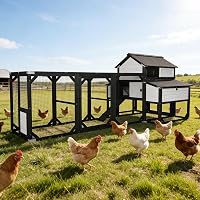
Do Chicken Runs Need to Be Covered?
Yes, most chicken runs should be covered, but not always fully. A roof over at least part of the run keeps feed and bedding dry, adds shade, and blocks hawks from above. An uncovered run still works in a mild, shaded, well-drained yard with a separate coop for shelter.
On this page (8 sections)
- Why does covering a chicken run matter?
- When can a chicken run stay uncovered?
- How much of the run should you cover?
- What are the downsides of covering a run?
- Which covered runs handle this well?
- How do you keep a covered run dry and ventilated?
- What about snow, wind and extreme weather?
- So, do chicken runs need to be covered?
Yes, most chicken runs should be covered, but not always fully. A roof over at least part of the run keeps feed and bedding dry, adds shade, and blocks hawks from above.
An uncovered run still works in a mild, shaded, well-drained yard with a separate coop for shelter.
Whether chicken runs need to be covered depends on your climate, your soil and how the run sits in the yard. A cover solves specific problems, and it also changes airflow and snow load, so the right answer is usually partial cover rather than a roof over every inch.
Why does covering a chicken run matter?
Covering a chicken run matters because it keeps the run usable in wet weather and protects the flock from above. A dry run means dry feed, drier bedding and less mud tracked into the coop.
Rain turns an open run into a muddy pit within a few storms. Wet litter grows smelly and breeds flies, and damp feathers make hens more prone to chill.
A cover sheds rain off the run so the ground underneath stays workable.
Shade is the second reason. Hens handle cold better than heat, and a shaded corner gives them a place to escape the afternoon sun.
A solid roof or a fabric cover both cut direct sun, and open sides let breezes pass through.
The third reason is overhead predators. Hawks, owls and climbing animals look for an open top.
A roof or taut cover over the run closes that route. For the basics of what a run is and how it fits the coop, see what is a chicken run.
When can a chicken run stay uncovered?
A chicken run can stay uncovered when the climate is mild, the yard has deep shade and the ground drains well. In that setup, the run is mainly a daytime space and the coop does the weather protection.
Mild, dry regions with little snow are the easiest case. If rain is rare and the soil drains fast, an open run stays usable most of the year.
Deep tree shade can replace a roof in summer.
Good drainage matters more than people expect. A run on a slope or on gravel drains quickly, while a run in a low, clay-heavy spot holds water.
Even a small roof over the feeder helps in a wet yard.
A run that is only used for short daily outings also needs less cover. If hens spend most of the day in a large coop and yard, the run is more of a passage than a living space.
Our comparison of chicken runs covers open and covered designs side by side.
How much of the run should you cover?
Cover a third to a half of the run, enough for the feeder, waterer and a dry dust bath. Partial cover gives shade and shelter while open sides keep airflow moving.
A smaller covered corner is often better than a full roof. Hens can choose sun or shade, and the open part dries faster after rain.
A fully roofed run in a humid climate can stay damp and airless.
Place the cover over the end where the feeder and waterer sit. Spilled feed stays dry and the waterer is less likely to grow algae.
A dry patch of ground under the cover also gives hens a dust-bathing spot in wet weather.
If you plan to add solid walls later, read should a chicken coop be insulated first. Insulation changes the ventilation balance, and a covered run should not be sealed tight at the same time.
What type of cover works best?
A fabric or tarp cover sheds rain and blocks sun at low cost, and it is easy to remove in good weather. A solid metal or poly roof lasts longer and handles snow better, but it blocks more light.
For most backyard runs, a waterproof fabric cover over a peaked or sloped frame is the practical middle ground. It keeps the run drier than open sky without turning the run into a dark box.
A solid roof suits windy, snowy sites where a tarp would flap or tear.
What are the downsides of covering a run?
The main downsides are less airflow, snow load and cost. A cover that traps heat or blocks wind can make a run hotter and damper than an open one.
Airflow is the big one. A solid roof over a run with solid sides leaves humid air with nowhere to go.
Keep the sides open with mesh and leave the upwind side clear so breezes cross the run. Humidity and ammonia build-up harm hens more than cold does.
Snow is the second concern. Wet snow is heavy and can bend a light frame or tear a cover.
Sloped and domed roofs shed snow better than flat ones, and removing the cover in extreme weather protects the frame.
Cost and setup effort round out the list. A covered metal run costs more than an open pen, and a large cover takes longer to install.
The trade-off is a run you can use in more weather.
Which covered runs handle this well?
Three covered runs show the range. The first is the best pick for most backyards because its frame and cover are built for year-round outdoor use.
The 9.8 x 6.5 Ft Covered Metal Run measures 9.8 x 6.5 x 6.5 ft and gives walk-in headroom for feeding and cleaning. Bottom corner braces and a rear support pole reduce frame wobble.
The peaked roof and detachable UV-resistant cover shed rain and snow and shade the run, and the 47 x 40 in eucalyptus perch gives hens a raised roost. Assembly takes about 2 hours.
The NUGRIART Portable Run with Cover suits small flocks and starter setups. It measures 123 x 38 x 34 in and has 1.6 in wire spacing for airflow and visibility.
Five access doors and a gravity door lock make feeding and cleaning simple. The waterproof PE cover gives shade and light weather protection.
Its low height means you reach in rather than walk in.
The VEVOR 9.8 x 19.3 Ft Walk-In Run offers the most space, at about 19.6 x 9.8 x 6.5 ft. Its galvanized steel pipes and hexagonal mesh form a sturdy frame, and the domed PE tarp sheds water and light snow.
Four-sided ventilation keeps air moving. VEVOR recommends reinforcing the base against digging predators and removing the cover in extreme weather.
Which one should you pick?
Pick the 9.8 x 6.5 Ft Covered Metal Run for a typical backyard flock that needs year-round cover. Pick the NUGRIART run for a small flock on a budget that moves the pen often.
Pick the VEVOR run when you have a long yard and a bigger flock.
How do you keep a covered run dry and ventilated?
Keep the cover sloped, leave the sides open and clean wet litter promptly. A covered run fails when water pools on top or humid air has no exit.
Check the cover after storms for sagging or pooled water. Tighten the frame and clear debris so rain runs off.
On a fabric cover, re-tension the straps so it doesn't flap in wind.
Keep the ground under the cover from staying wet. Rake soiled litter, and add gravel or wood chips in the heaviest traffic spots.
A dry floor under the roof is the whole point of the cover.
Leave the downwind side open so air crosses the run. Mesh sides block predators without blocking breeze.
For the coop end of the setup, see should a chicken coop have a window to keep airflow balanced between coop and run.
What about snow, wind and extreme weather?
In snow and high wind, remove a fabric cover and reinforce the frame. Wet snow can collapse a light run, and a flapping tarp can tear or pull the frame out of shape.
The VEVOR guidance is to take off the rain cover and add extra bracing in extreme weather. That advice fits most fabric-covered runs.
Clear snow off the roof after each storm and check the frame for bends.
Wind is the other risk. A large flat cover acts like a sail.
Face the open side away from the prevailing wind and anchor the frame to the ground. On a portable run, move it to a sheltered spot before a storm.
So, do chicken runs need to be covered?
For most backyards, yes. Chicken runs are easier to keep clean, drier and safer when at least part of the run has a cover.
A roof over the feeder and a shaded corner solves the main problems without sealing the run.
Leave a run fully open only in a mild, shaded, well-drained yard where the coop carries the weather protection. In wet or snowy climates, cover a third to a half of the run and keep the sides open.
If you want a covered run ready to set up, the 9.8 x 6.5 Ft Covered Metal Run is the best pick for most flocks. For a small, movable pen, choose the NUGRIART Portable Run.
For a large yard and a bigger flock, the VEVOR walk-in run has the space. Compare more options in our guide to chicken runs before you buy.
Frequently asked questions
Does a covered run replace a coop?
No. A cover sheds rain and sun but does not hold warmth or give a secure, raised place to roost and lay.
Hens still need a coop with solid walls and a closing door, and the run attaches to it as the daytime outdoor space.
Will a solid roof make the run too hot in summer?
It can if airflow is poor. A solid roof blocks sun but also traps heat, so leave the sides open to the breeze and keep the shaded part of the run deep.
A fabric or mesh cover lets more air move while still blocking direct sun.
Can snow crush a covered chicken run?
Wet, heavy snow can bend a light frame or tear a fabric cover. On metal runs, knock snow off the roof and follow the maker's advice to remove the tarp and reinforce the frame in extreme weather.
Sloped or domed roofs shed snow better than flat ones.
How much of the run should be covered?
Cover enough for the feeder, waterer and a dry dust-bathing spot, often a third to a half of the run. A smaller covered corner plus open sides gives hens shade and shelter without turning the whole run into a dark, airless box.
Does a cover keep predators out?
A roof helps against hawks and climbing predators that come from above, but the sides and base still matter. Bury or weight the bottom edge against digging animals, and check the wire for gaps.
The cover is one layer of defense, not the whole system.